100 Anxiety Journal Writing Prompts
Putting anxious thoughts on paper is one of the most grounding habits a person can build. But staring at a blank page often makes the quiet moments louder. That is exactly why 100 Anxiety Journal Writing Prompts exists — not as a vague idea, but as a ready-to-use, beautifully designed tool that removes the friction between wanting to write and actually writing. Whether you are a therapist creating client resources, a coach building a mental wellness program, a content creator designing self-care printables, or simply someone who wants a more intentional journaling routine, this editable Canva interior gives you a structured starting point that feels gentle, creative, and genuinely useful.
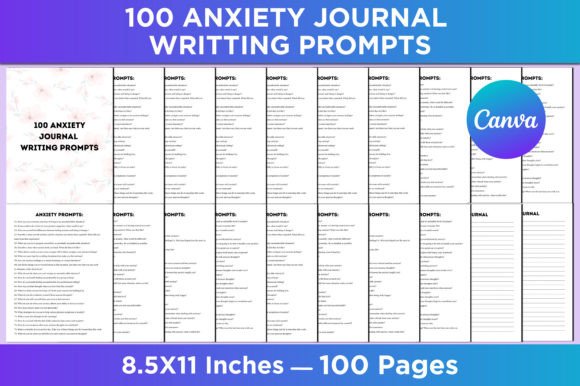
Below the surface, a set of prompts is never just a list. It is a framework that invites reflection, helps name the unnameable, and slowly teaches the mind that anxiety can be met with curiosity instead of fear. What makes this particular collection stand out is its flexibility — the 100 pages are fully editable, come in high-resolution JPG, PNG, and PDF formats, and are sized at a clean 8.5×11 inches with no bleed. That means the file is truly production-ready, whether you are printing a personal journal, building a digital product for your shop, or adapting the layouts to match your brand voice.
What Actually Comes Inside the File
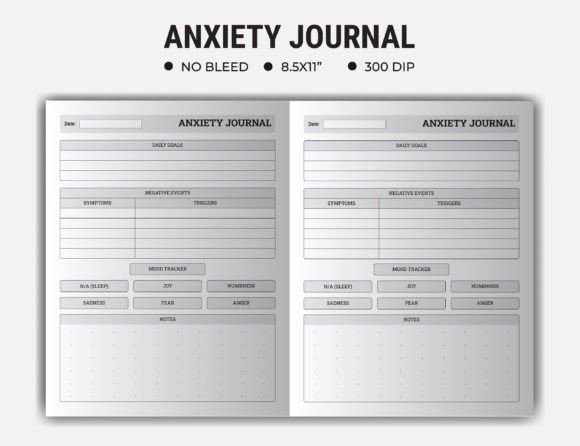
When you open the package, you are not getting a locked PDF that forces you into a specific look. You get an editable Canva link that lets you customize fonts, colors, images, and even the phrasing of individual prompts while keeping the original structure as your safety net. Alongside the Canva access, the download includes high-quality JPG, PNG, and PDF versions — all at 300 DPI with no bleed. That means crisp prints every time, whether you use a home printer, a local copy shop, or a professional print-on-demand service. The 8.5×11 inch portrait layout is widely used for journals, workbooks, and binder inserts, so it fits most standard planning systems.
For creators and small business owners, this product removes hours of design work. The interior is already organized over 100 pages, each page holding a thoughtfully crafted prompt. Because the file belongs to pages instead of being a static card deck, you can use it as a complete journal interior, slice it into daily worksheets, or combine it with your own coaching materials. The prompt collection was built to treat anxiety with respect — no toxic positivity, no pressure to simply “think happy.” Instead, the prompts lean into noticing, naming, reframing, and gently untangling what anxiety brings to the surface.
Creative Ways Different Users Can Adapt the Prompts
The true value of an editable set like this is how it morphs to fit real-life goals. A therapist might replace some generic prompts with wording that matches their therapeutic approach, then print a client workbook that lives in a waiting room or goes home as homework. A wellness blogger could pull 30 prompts into a beautifully branded email challenge, sending one a day while linking to related articles. A stationery shop owner might tweak the typography to match a signature color palette, then sell the printable journal as a digital download on Etsy or Shopify.
Here are a few concrete directions people take with the same file:
- Daily journal books: Print the prompts as a bound workbook, spiral or perfect, for a private daily ritual. Because the files are high-resolution, the result feels professional.
- Digital tablet templates: Import the PDF or PNG pages into apps like GoodNotes or Notability. Annotate with an Apple Pencil and keep everything searchable.
- Workshop materials: Coaches and facilitators pull relevant prompts into slide decks or handouts. The Canva link lets them extract individual pages and resize them on a presentation canvas.
- Hybrid mental health products: Combine the prompts with habit trackers, breathing exercise guides, or grounding technique posters to build a complete anxiety toolkit.
- Membership content libraries: Use the full interior as a bonus inside a paid membership or course, where members appreciate ready-made journaling resources.
The common thread is that nobody has to start from an empty screen. The prompts already carry a careful, empathic tone; you simply shape the container they live in.
Writing Prompts That Actually Understand Anxiety
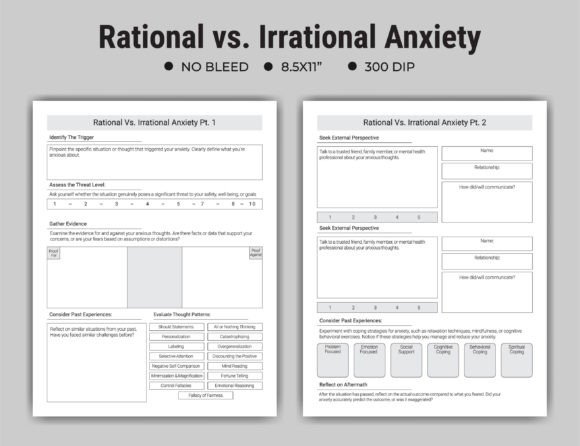
Not all journal prompts are created equal. Many collections treat anxiety like a problem to be fixed, pushing rapid reframes that feel dismissive. This set of 100 takes a different path. You will find invitations to explore bodily sensations (“Where do you physically feel tension right now, and what does it want you to know?”), track worry patterns (“Write down today’s recurring thought and ask yourself what proof exists for and against it”), and rediscover what safety feels like (“Describe a moment when you felt unexpectedly calm — what sensations, smells, or sounds surrounded you?”).
The prompts also build on each other naturally. Early pages often establish awareness without demanding change. Middle prompts introduce gentle reframing or self-compassion. Later items encourage forward-looking steps, always with permission to stay where you are. For someone creating a structured program, this progression is ready-made. For a person journaling solo, it provides a quiet sense of direction without a syllabus feel.
Keeping Your Results Clear, Consistent, and Audience-Friendly
When you adapt an editable interior, a little intentionality goes a long way. If you are selling or sharing the final product, here are a few practical guidelines to keep the experience smooth for the end user:
- Match the tone to your audience. If you serve teens, you may tweak language slightly. If your readers prefer a minimalist style, strip the decorative elements and let the monochrome text breathe.
- Maintain visual consistency. Because the Canva file is organized across 100 pages, use Canva’s styles and brand kit features to apply fonts and color palettes in one go. This avoids a patchwork look.
- Test print before distributing. Even with 300 DPI and no bleed, paper types differ. Print a sample page at home or order a proof copy to confirm readability and margin comfort.
- Keep the writing prompts clear. If you rephrase a prompt, read it aloud. Does it still feel like an open question rather than an instruction? Anxiety writing needs spaciousness, not a checklist.
- Add a short user guide. If you bundle the prompts into a product, include a page or two explaining how to approach the journal. Simple lines like “You can skip any prompt that doesn’t feel right today” make the resource feel safer.
Originality lives in how you frame the collection. The base file is a strong, empathetic interior. Add your voice, your brand, your integration with other tools, and it becomes unmistakably yours.
Why Prompts Work Better Than Blank Pages
Blank journals sell well, but they are underused. The paradox is familiar: people buy beautiful notebooks and then feel pressure to write something meaningful. Anxiety, in particular, feeds on that pressure. A structured prompt bypasses the critic. It says, “Just answer this one question. That’s enough.” This set of 100 prompts gives a long ramp for building the journaling habit without ever forcing vulnerability too quickly.
For bloggers and influencers, this is a content goldmine. A single prompt can anchor an entire post — personal story, actionable takeaway, and reader call-in. The 100-page count means you have material for months of social media content, reel hooks, or newsletter deep dives. And because you can edit the text inside Canva, you can repurpose prompts into quote graphics, story stickers, or pin-worthy images without ever losing visual consistency.
Practical Project Ideas to Spark Inspiration
If you are still playing with possibilities, here are a few realistic project snapshots built around the 100 Anxiety Journal Writing Prompts:
- The 30-Day “Meeting My Anxiety” Challenge. Select 30 prompts, create a 30-page printable, and launch it as a free or low-cost lead magnet. Pair each prompt with a short daily email that shares a personal reflection and invites subscribers to write theirs.
- A guided journal hybrid for new mothers. Adapt the prompt wording to address postpartum anxiety specifically. Add soft illustrations and a few pages of grounding exercises. Sell as a PDF on your blog or marketplace.
- Student wellness notebooks. Blend the prompts with time-management spreads and study break coloring pages. Market to university counseling centers or directly to students via Etsy.
- A therapist’s customizable intake journal. Keep the anxiety prompts as a core section but add intake forms, mood trackers, and session reflection pages. Because the Canva file is fully editable, everything stays visually unified.
- An Instagram carousel series. Pull one prompt per week, design a branded text slide, and create a carousel where the first slide is the prompt, followed by your interpretation or a gentle note of encouragement.
Each of these ideas takes the same foundational file but wraps it in a completely different purpose and audience. That is the advantage of an editable interior — it bends to your needs rather than locking you into a single format.
Making the Most of an 8.5×11-Inch Format
The US letter size is no accident. It prints easily almost anywhere in the world, fits three-ring binders and discbound planners, and trims down cleanly if you prefer a smaller half-letter booklet. For printable sellers, this size signals clarity: customers know exactly what they are getting. For personal use, the large page offers enough space to write without feeling cramped, which is important when someone is processing anxious thoughts and may need room to scribble, list, or draw.
Because the files come with no bleed, you don’t have to worry about white margins being chopped off during commercial printing. This is a small technical detail that makes a big difference if you are using a print-on-demand service like Lulu or Kindle Direct Publishing for physical workbooks. Just upload, set your trim, and the interior falls into place without risky adjustments.
Building Confidence Through Editing
If you are new to selling printables or creating therapeutic resources, an editable Canva template is a forgiving entry point. You don’t need Adobe skills. You simply open the link, save a copy to your own Canva account, and start personalizing. Change the cover page to your preferred title such as “Quiet Mind Journal” or “Daily Anxiety Check-Ins.” Swap the background colors. Add your logo or website URL. Duplicate the pages if you want a longer workbook, or delete some if you want a mini sampler. The core voice of the prompts remains steady, so you can focus on presentation without rewriting from scratch.
For experienced designers, the file still holds appeal. You can pull the prompt text into your own InDesign or Affinity layouts using the provided PDF, or use the high-resolution JPGs as placeholder layers while you create something entirely new. The prompts themselves act as reliable content, tested and empathetic, so you are not guessing what will resonate with an anxiety-prone audience.
Mental wellness is a sensitive space. The prompts in this collection carry a tone of permission, patience, and self-kindness. That tone is the most valuable asset you can preserve, whether you change the fonts or keep them as they are. Because at the end of a long day, someone will open a page, read a simple question, and feel safely invited to write. That moment matters more than any design element.
From a creative business standpoint, 100 Anxiety Journal Writing Prompts is not just content. It is a springboard. It cuts down the hours you would spend researching, writing, and testing whether a prompt actually lands. That leaves you more energy for designing, marketing, and connecting with the people who need what you are building. Whether you are crafting your own mental wellness library, refreshing your product shop, or simply wanting a better journaling experience for yourself, this interior does the heavy lifting while you remain in full creative control.