Math Activity Book for Kids V-6: Understanding What It Offers and How It Compares
Choosing the right early math resource can feel like a balancing act. You want something that holds a child’s attention, introduces foundational concepts in a logical order, and fits your teaching style—whether you’re a parent supplementing schoolwork, a homeschooling educator, or a teacher looking for fresh classroom material. The Math Activity Book for Kids V-6 is one option among many, designed as a ready-to-print digital workbook that blends number introduction with a variety of hands-on activities. Before you decide, it helps to know exactly what’s inside, how it stacks up against other formats, and where it might shine or fall short for different learners.
What’s Packed Into the Book’s 100 Pages
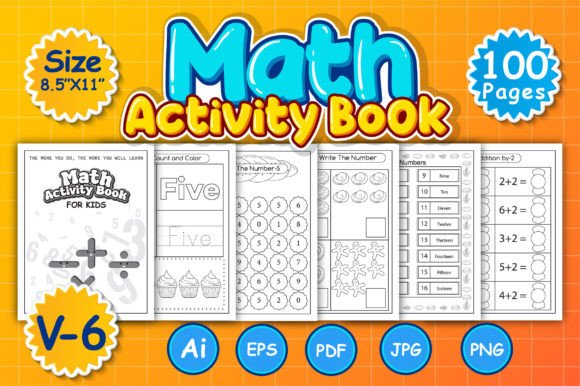
Rather than a single repetitive exercise, this activity book layers several skill areas across its hundred pages. The sequence starts gently with an introduction to numbers, then moves into Color The Correct Number tasks that strengthen one-to-one correspondence without needing writing yet. From there, children practice Counting And Writing to connect numeral recognition with fine motor skills. A separate section on Introduction To Numbers (often confused with the opening section) dives deeper—sometimes via ten frames, dot patterns, or simple grouping—so kids build mental images of quantities.
The middle of the book keeps momentum going with puzzles. Fill The Missing Numbers challenges sequencing and pattern recognition, while the Number Maze turns counting into a path-following game. Then the math shifts into operation territory: dedicated sections for Addition and Subtraction introduce basic equations, usually within sums up to 10 or 20. This progression mirrors what many early childhood curricula recommend: from concrete object counting to abstract symbol manipulation.
How the Download Format Shapes the User Experience
The product isn’t a physical book that arrives in the mail. The download includes several file types: a fully editable AI (Adobe Illustrator) file, an EPS, plus PNG, JPG, and a ready-to-print PDF. That range matters for different kinds of users. Someone who wants to personalise page sequences or translate instructions can open the AI file and make changes; others who just need to hit print can rely on the high-resolution PDF. All pages are sized 8.5″ x 11″ with no bleed, which means they print cleanly on standard letter paper without trimming—useful if you’re printing at home or sending the file to a copy shop.
The trade-off is clear: you get unlimited reprints for one payment, but there’s no physical copy, no spiral binding, and no glossy cover. For families who want a grab-and-go workbook, this format adds an extra step. However, for teachers who need to print just a few pages for morning work or a parent who wants to reuse the same page with multiple children over time, the digital design is a practical advantage.
Where This Activity Book Stands Out Among Alternatives
When you put the Math Activity Book for Kids V-6 side by side with other printable early math resources, a few distinctions become clear. Many free printable sets cover counting to 10 or a handful of addition problems, but they rarely offer 100 continuous pages that follow a cohesive arc. This volume’s length alone provides consistency; a child can work through it over several weeks without jumping between disconnected worksheets from different sources.
Compared with a physical workbook from a big publisher, the editable files offer a flexibility rarely found in mass-produced books. If your child struggles with subtraction but breezes through counting, you can reorder the sections or print extra subtraction sheets without buying a whole new book. You also sidestep the “one write-once” limitation that comes with consumable workbooks—here, pages are endlessly refreshable.
On the other hand, interactive apps and hands-on manipulatives approach math differently. An app might offer instant feedback, animations, and adaptive difficulty that a static PDF can’t replicate. For some children, the tactile feel of a tablet or the sound of a correct answer reinforces learning more than paper. The Math Activity Book for Kids V-6 works best when you want screen-free, pen-and-paper practice—especially for developing handwriting alongside math. It’s not a replacement for live instruction or play-based math games; it’s best seen as a supplemental tool that strengthens skills through repetition and varied visual formats.
Strengths That Align With Early Learning Goals
The structure supports several research-backed practices. The mix of coloring, circling, and writing engages fine motor development while keeping the cognitive load manageable. Color The Correct Number exercises, for instance, allow a three-year-old who can’t yet form digits to still demonstrate one-to-one counting. Moving from that to Counting And Writing bridges a physical skill gap patiently.
Number mazes are another quiet strength. They require a child to scan, plan a path, and count sequentially—often without realising they’re practicing. This type of embedded repetition feels more like play, which can reduce math anxiety in early learners. Additionally, the addition and subtraction sections tend to rely on visual aids (dots, pictures of objects) before introducing bare number sentences. That visual-to-abstract progression mirrors how many children develop number sense naturally.
The fact that the entire book is available in AI and EPS formats gives it a lifespan beyond a single child’s pace. Therapists, tutors, and intervention specialists can adapt pages for specific needs—enlarging print, changing colour cues for visual processing issues, or isolating just a few problems per page. This customizability isn’t something a typical paperback workbook can claim.
Tradeoffs and Situations That Might Call for Something Different
No single resource fits every learner perfectly, and being honest about the limits helps you avoid wasted time and money. Because the book starts with an introduction to numbers, children who already count beyond 20 and understand basic addition may find the first dozen or so pages too simple. Skipping sections is easy with a digital file, but if your child is ready for sums past 20 or introduction to time and money, this book stops short of those topics.
The print-it-yourself nature also assumes you have access to a reliable printer and enough paper and ink. If your home printer struggles with detailed images or you’d rather not manage the logistics, the initial convenience of the download can become a hurdle. In that case, a pre-printed workbook with perforated tear-out pages might be less frustrating.
Some children thrive on narrative-driven learning—math woven into a story or character journey. The Math Activity Book for Kids V-6 is activity-focused rather than story-driven. That’s perfectly fine for many, but if your child loses interest without a plot or recurring characters, you may need to supplement with a narrative-based book or an educational app that weaves math into a game world.
Who Gets the Most Value from This Book
The ideal user profile often looks like this: a caregiver or educator with children roughly 3 to 6 years old, seeking a thorough, non-consumable resource that can be used across multiple kids, with the option to edit if needed. Preschool teachers who rotate activity centres can print and laminate the Number Maze or Fill The Missing Numbers pages, creating reusable station materials. Parents following a Montessori-inspired or homeschool routine can introduce the pages sequentially, pairing them with physical counters or number rods for a blended approach.
The book also appeals to those who prefer a “buffet” method: you don’t have to use all 100 pages. Pick out what fits the week, skip around, and return to earlier sections for review. The combination of counting, writing, mazes, and operations means one file covers a broad spectrum of kindergarten readiness skills, which reduces the need to hunt for separate materials for each sub-skill.
When a Different Approach Makes More Sense
If your primary goal is to reduce screen struggles and you know your child engages more with physical objects, you might pair this printable with actual counters or a ten frame board, but you could also lean entirely into manipulatives-based learning without a workbook at all. Some families find that a workbook format—printed or store-bought—introduces a performance pressure that spontaneous games avoid. In that case, board games that involve dice counting, card games like “Make Ten,” or everyday cooking math might build skills more naturally.
For children who need extra support in attention or fine motor delays, the book’s writing demands may need adjustment. The AI file option helps here: you can delete the writing trace sections or increase dotted font size. But if you’d rather not edit files, you might be better served by a resource designed specifically for pre-writing or large-motor math activities.
Additionally, if you’re short on time and prefer a spiral-bound workbook you can toss in a bag for road trips, the digital-only format of the Math Activity Book for Kids V-6 might feel like an extra chore. While you can certainly print and bind it yourself, that requires planning. Some parents love that DIY aspect; others would rather pay a little more to have it arrive ready to go.
Making a Practical, Informed Choice
There’s no universal “best” resource—only the one that matches your child’s stage, your teaching setup, and your tolerance for prep work. Ask yourself a few key questions: Do you need something you can use over and over for siblings or students without repurchasing? Is the ability to edit pages important for your child’s unique learning needs? Are you comfortable printing and potentially binding sheets? If the answers lean toward yes, the Math Activity Book for Kids V-6 offers a structured, varied, and economical addition to an early math toolkit.
If, however, you value portability above all, want immediate built-in feedback, or need content that extends into higher-level topics, you might combine this printable with an app or choose a resource that goes further. The good news is that early math learning benefits from layering: a printable like this one can serve as the daily “paper practice,” while a set of counting bears and a quality digital game fill other niches. Understanding what this specific book does—and what it was never meant to do—helps you spend your budget and energy wisely, building a math environment that supports real growth without unnecessary frustration.