Evaluating Pre-Formatted Interiors for Your Publishing Goals
In the self-publishing landscape, low-content books represent a significant segment of the market. Publishers often seek a bridge between creative design and technical execution, specifically for products like journals and planners. The Monthly Goal Planner for KDP is a digital asset designed to provide that bridge, offering a ready-made interior file structure. Rather than viewing this as a simple purchase, it is more effective to evaluate it as a strategic tool. For those researching the best way to enter the planner niche, understanding what this product offers—and what it doesn’t—is crucial for making an informed decision that aligns with a long-term publishing roadmap.
Understanding the Monthly Goal Planner for KDP Package
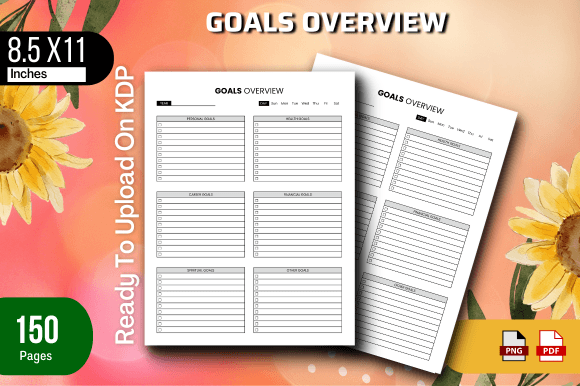
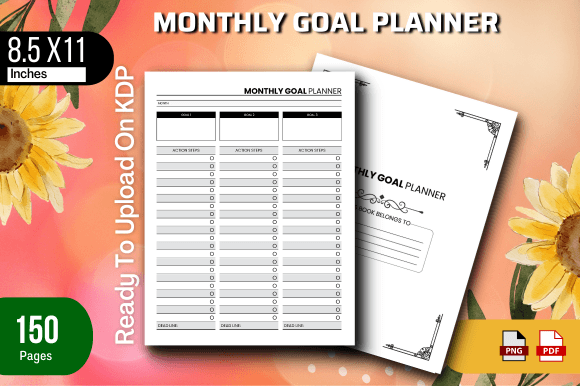
When evaluating a pre-made interior product, the technical specifications are the primary basis for decision-making. The Monthly Goal Planner for Amazon KDP bundle is structured to cover the fundamental assets required for listing a book on the platform. The core offering consists of a specific set of formatted files designed to streamline the upload process to Kindle Direct Publishing. Understanding these assets individually helps clarify what value they bring to your project:
- Ready-to-Upload PDF File: This is the core of the product, promising a direct upload without the need for manual formatting adjustments like margin resets or mirror page setups.
- 8.5 x 11 Inches Format: This specification targets the large-format planner market, a standard size for office desks but distinct from the portable 6x9 inch journal format.
- 150 Total Pages: The interior length offers a substantial base, suitable for undated or dated yearly goal tracking, providing a thick spine profile on the retail shelf.
- KDP Tested Quality Assurance: A critical detail for publishers who have faced rejection errors. This indicates the file has been validated against Amazon’s strict printing margins and bleed requirements.
- PNG Image Included: This visual asset often serves as a base for creating a corresponding paperback cover or promotional mockups, aligning the visual identity with the interior structure.
Why Publishers Evaluate Low-Content Interiors
The motivation behind acquiring a pre-made planner file often centers on risk mitigation and operational efficiency. For many, the technical barrier of entry in Kindle Direct Publishing—such as understanding bleed, gutter margins, and PDF/X-1a standards—can be daunting. A pre-formatted file, particularly one marketed as a Monthly Goal Planner for KDP, removes these obstacles. It allows the publisher to focus solely on the cover design and keyword optimization. However, a purely technical solution invites a broader evaluation regarding differentiation. The convenience of a "ready to upload" PDF must be weighed against the demands of a competitive marketplace where identical interior structures can lead to customer dissatisfaction if not properly disclosed or modified.
Analyzing the Tradeoffs: Customization and Market Saturation
While the convenience factor is significant, a thorough evaluation reveals inherent tradeoffs. The first is creative limitation. An interior PDF, by its nature, is a fixed structure. Unless you have graphic design software capable of heavy modification, you are locked into the specific layout sequence and typography provided. The second tradeoff relates to market differentiation. If a product is commercially available, other sellers likely populate the same niche with the exact same 150-page framework. This doesn't render the product unusable, but it shifts the burden of value proposition entirely onto your marketing and cover design skills. The practical expectation should be that your success relies less on the interior design and more on your ability to externally brand a generic structure.
The Significance of the 8.5 x 11 Dimensions
Selecting an interior size is a strategic choice, not just a formatting one. The 8.5 x 11 inches specification targets a stationary-centric audience. This size is ideal for customers seeking a desk planner with ample writing room, but it is less practical for portability. When evaluating this asset, consider your specific target demographic. If your customer avatar prefers a planner they can slip into a laptop bag or purse, the large format might miss the mark, whereas a standard A5 or 6x9 alternative might align better. The 150 total pages in this trim size create a substantial book, which often supports a higher royalty rate but also a higher print cost that must be passed on to the customer.
Validating the "Tested on KDP" Claim
One of the most practical pain points in low-content publishing is the rejection notice: "Assets have margins outside the printable area." A file that has been tested on Amazon KDP mitigates this specific headache. In theory, it ensures the alpha channel, transparency, and font subsets are configured correctly. However, readers evaluating this should still approach with technical caution. Amazon occasionally updates its hardware printers, which can shift margin tolerances slightly. A good practice is to open the ready-to-upload PDF in a professional reader like Adobe Acrobat to visually inspect the trim and bleed boxes before uploading, ensuring that the "tested" standard still matches the current KDP environment.
When a Pre-Formatted Planner is a Strong Fit
There are several scenarios where a ready-made interior offers a distinct advantage over custom formatting. Understanding these situations helps clarify whether this asset type matches your immediate needs:
- The Technical Novice: If you lack the time or inclination to master InDesign, Affinity Publisher, or even Canva’s margin settings, this product eliminates the learning curve entirely.
- The Volume Strategy: Publishers employing a "quantity over diversity" approach across multiple pen names often use pre-made interiors. Using a stable, 150-page template allows for rapid scaling without compromising structural quality.
- Concept Validation: Before investing heavily in a custom interior, this allows for a low-cost market test to see if a goal planner concept attracts keyword traffic and conversion.
When Alternatives Might Be Worth Considering
Conversely, a pre-purchased interior might not be the optimal path under certain conditions. If your brand identity relies heavily on a unique intellectual property aesthetic, a generic interior can undermine your marketing. Similarly, if you possess intermediate graphic design skills, using a drag-and-drop tool might yield a more distinct result without much extra effort. Alternatives are also worth exploring if your market research indicates that the "8.5 x 11, 150 pages" combination is highly saturated in your target sub-category and you cannot identify a cover concept radical enough to disrupt the search results. In these cases, a custom layout or a different trim size may provide better long-term returns.
Practical Decision-Making Framework
To determine if the Monthly Goal Planner for KDP aligns with your publishing objectives, it helps to move beyond the "what's included" list and apply a practical framework to the investment. Start by calculating the time saved versus the uniqueness lost. If you can add substantial value—such as adding a hyper-focused branding theme or bundling it with a digital course resource—the standardization of the interior becomes less of a liability. Ask yourself if the included PNG image provides enough value to offset the cost of a purely formatted PDF.
Ultimately, the decision revolves around your willingness to view this asset as a raw ingredient rather than a finished product. A successful low-content publisher evaluates the base file’s structural integrity (margins, bleed, binding compatibility) and treats the aesthetic appeal as their own responsibility. If the 150-page structure and large format pass that structural integrity test for your audience, the product serves its purpose as a reliable shortcut. If you cannot detach your vision of the book from the interior’s fine details, a custom-crafted alternative is likely the more satisfying and strategically sound route.